Andy Warhol at the theatre
Andy Warhol is considered one of the greatest artists of the 20th century.
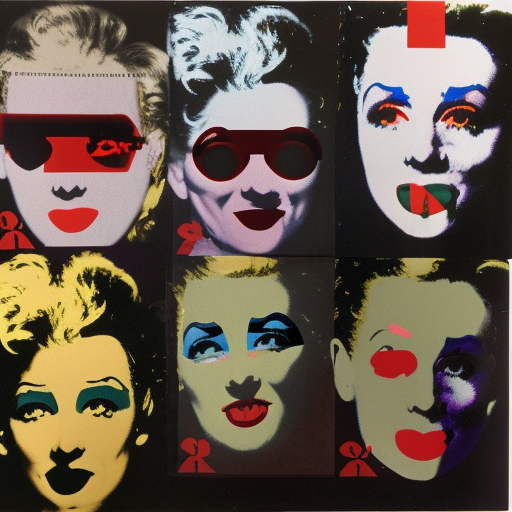
Famous for his provocative and original paintings, he was a leading figure in underground art and helped redefine cultural norms. His unique vision has influenced not only contemporary artists but also today's comedians. In this article, we will examine in detail Andy Warhol's influence on modern artists and comedians and explain how his works have changed our perception of art and popular culture. Warhol's use of pop culture and his irreverent take on subjects such as celebrity, consumerism, and death made him a revolutionary figure in the art world. His vivid colors, playful imagery, and tendency to blur the lines between high and low art have left an indelible mark on popular culture. Warhol's influence can be seen in everything
1. The life and career of Andy Warhol:
Andy Warhol was an American artist, painter, actor, film director and producer, photographer, and writer born on August 6, 1928, in Pittsburgh, Pennsylvania. He is considered one of the greatest artists of the 20th century. As a child, he was heavily influenced by the popular culture of his time and drew inspiration from commercial advertising to create his art. After graduating with a degree in Fine Arts from Carnegie Mellon University in 1949, he moved to New York City, where he became a renowned and celebrated artist. He created abstract works in the 1950s that were highly praised by art critics. In the 1960s, Warhol turned to more popular subjects such as portraits of movie stars and produced a variety of works for sale to satisfy his wealthy clientele. He died on February 22, 1987, in New York City.
2. Warhol's influence on contemporary artists:
Warhol's influence is evident in the works of many contemporary artists, from his Pop Art contemporaries Roy Lichtenstein and James Rosenquist to current generations of painters and sculptors like Takashi Murakami and Jeff Koons. His vibrant colors, bold style, and interest in popular culture have been a source of inspiration for many modern artists. His unique approach to artistic creation has also inspired younger generations to experiment with the boundaries of their mediums. Warhol's influence extends beyond painting; his work has also transformed music videos, fashion, and even advertising campaigns, demonstrating how artists can appropriate popular culture.
3. Andy Warhol's major works:
Andy Warhol's major works include famous canvases such as "Campbell's Soup Cans" (1962), "Marilyn Diptych" (1962), and "Flowers" (1964). He also produced several notable experimental films, including "Sleep" (1963), "Chelsea Girls" (1966), and "Blue Movie" (1969). His other works include his silkscreened self-portraits (1964–1966), as well as his Polaroid photographs and acrylic paintings on canvas depicting famous figures such as Elvis Presley and Elizabeth Taylor. His books include "The Philosophy of Andy Warhol: From A to B and Back Again" (1975), along with a variety of publications on popular music, contemporary art, and popular culture of the 1960s.
4. Warhol's influence on popular culture:
Andy Warhol's influence extends beyond the art world into popular culture. His experimentation with new media and his use of popular culture themes in his work helped shape our understanding of modern art. His works have inspired fashion designers, filmmakers, musicians, and other contemporary artists.
5. How did Andy Warhol influence today's artists and comedians?
Andy Warhol's influence on today's artists and performers is undeniable; his work continues to stimulate their imagination and inspiration. His use of the Pop Art style inspired some contemporary artists to employ the simple yet effective graphic design associated with Pop Art to create powerful works that explore diverse social issues such as sex, race, and religion. Warhol also contributed to the postmodernist movement through his relaxed approach to art, which emphasized a nonconformist attitude toward established social conventions. His contribution to performance art was pivotal; his provocative stage presence often elicited great admiration from those who attended his shows. Furthermore, Warhol expanded the use of audiovisual media as a characteristic art form of the 21st century. He understood that he could use available technology to create images that would be seen by a vast audience. Today, the techniques he introduced continue to inspire many modern video artists, as well as some contemporary theatre directors.
6. What are the main artistic styles and techniques associated with Andy Warhol?
Andy Warhol's distinctive artistic style consists primarily of simple yet colorful Pop Art motifs, often quite basic in traditional or classic advertising, with a limited palette of no more than three complementary colors. He also enjoyed juxtaposing different types of textures to create complex visual effects. Furthermore, Warhol was a technical innovator; he made extensive use of offset lithography to reproduce his creations for mass distribution. He was the first to use this innovative technique to print multiple copies on paper or canvas in small quantities. In addition, he used the variable silkscreen printing process to reproduce the original photographic images he needed for certain pieces, such as those known as the silkscreened self-portraits (1964–1966). He also used acrylic paint on canvas to create his famous portraits of celebrities such as Elvis Presley and Elizabeth Taylor. Warhol was a master of appropriation and transformation, techniques still employed by contemporary artists today. Finally, he developed a unique approach to the popular culture of the time, using it in unexpected ways to explore themes of consumerism and fame.
7. What lasting legacy did Andy Warhol leave us?
Andy Warhol's enduring legacy is one of innovation and exploration that continues to inspire modern art, fashion, and music today. His use of Pop Art helped shape how we perceive popular culture in all its forms, and his experimentation with new media made him a key figure in the development of video and digital art. Warhol's work has had a lasting impact on our visual culture and continues to inspire many contemporary artists. He challenged traditional notions of beauty and explored themes such as celebrity, wealth, consumerism, sexuality, and death that remain relevant today.
8. Lessons to be learned from Andy Warhol's work for today's artists and actors:
The sometimes controversial lessons drawn from Warhol's remarkably prolific and enduring work demand his continued recognition as the undisputed master of the vanguardia behind 21st-century popularity and 21st-century postmodernity. His central message is to strive for originality and seek unexpected sources for artistic creation; to highlight the manipulation of cultural codes by mainstream media; and to find extraordinary charity in the commercial vulgarity of American popular culture. His message encourages artists to think of their work as unique products, to strive to transcend conventional boundaries, and to attempt new avenues of creative expression with the persistent confidence that certain risks are worth taking. The world of art education sometimes runs counter to the atrophic conformism of contemporary cultural fusion. Warhol's legacy remains a source of inspiration, education, and creative liberation for artists and performers today.
The concept of irony is integral to Andy Warhol's work, which explored the paradox between popular culture and high art. His use of vibrant colors, simple imagery, and repetition was intended to challenge traditional notions of beauty by transforming everyday objects into works of art. Warhol's work also reminds us that creativity can be found in the most unexpected places, often by deconstructing and reinterpreting popular culture. He taught us to look beyond appearances and to think critically about how we perceive the world around us. Andy Warhol's impact on popular culture continues to defy the passage of time, and a play about the artist's life is currently playing at the Laurette Theatre in Avignon
Andy Warhol exerted a major influence on pop culture and continues to inspire artists and comedians today. His work made him a true icon of modern art and gave birth to a new form of artistic expression that has inspired entire generations. His bold vision and iconic works were the catalyst for the development of a world where art and culture are more visible and accessible than ever before. He taught us to think outside the box and find beauty in the most unexpected places. Warhol's work will always be remembered as a revolutionary statement about art, culture, and society, still relevant today. The lessons we can learn from Andy Warhol are endless, but his enduring legacy will forever remain timeless.
His unwavering commitment to pushing the boundaries of creativity, challenging traditional notions of beauty, and exploring themes such as celebrity, wealth, consumerism, sexuality, and death are lessons that remain relevant today. Warhol's work encourages us to think critically about our world and how we interact with it—prompting us to look beyond appearances and embrace the unexpected. As such, Warhol remains a major influence on contemporary and future generations of artists, actors, and thinkers. He will always be remembered as an inspiring figure who showed us that creativity can emerge from the most unexpected places, such as the Avignon Festival.